

Views: 0 Author: Site Editor Publish Time: 2024-11-05 Origin: Site


Hydraulic hose plays a vital role in the hydraulic system. It is not only responsible for transmitting liquid or gas pressure, but also directly affects the safety and reliability of the system. However, hydraulic hoses may break during use, which will not only cause system failure but may even cause serious safety accidents. This article will explore the causes of hydraulic hose breakage and propose corresponding preventive measures.
Hydraulic hoses are composed of an inner rubber layer, middle rubber layer, wire winding reinforcement layer, and outer rubber layer. The inner rubber layer directly contacts the transported liquid and has good oil resistance and sealing properties; the middle rubber layer provides additional protection and support; the wire winding reinforcement layer is the main pressure-bearing part of the hydraulic hose, usually made of multiple layers of steel wire weaving or winding; the outer rubber layer plays a role in protecting the internal structure from the external environment.
Overpressure use: The hydraulic hose is designed with a certain working pressure range, exceeding this range may cause the hose to rupture. For example, if the maximum working pressure of the hose is 60MPa, and it exceeds this value in actual use, it is easy to cause the hose to burst.
Mechanical damage: During use, hydraulic hoses may be stabbed or scratched by external sharp objects. These damages will weaken the structural strength of the hose and eventually lead to breakage. Especially in high-pressure environments, even tiny scratches can have serious consequences.
Aging and wear: Over time, the material of the hydraulic hose will gradually age, its elasticity will decrease, and its pressure resistance will weaken. In addition, long-term friction and vibration will also accelerate the wear of the hose, making it more likely to break.
Improper installation: If the bending radius of the hydraulic hose is too small during installation, or the joint connection is not firm, it will increase the stress concentration point of the hose, thereby reducing its service life. Especially at the quick connector, if it is not installed in place, it is easy to cause leakage or breakage.
Temperature influence: Extreme temperature conditions will have an adverse effect on hydraulic hoses. The high temperature will soften the rubber material and reduce its pressure resistance; the low temperature will make the rubber harden, lose elasticity, and easily break. Therefore, when selecting a hydraulic hose, it is necessary to consider the temperature range of the working environment.
Chemical corrosion: Certain chemicals will corrode the material of the hydraulic hose, causing cracks or holes on the surface of the hose, and eventually leading to breakage. Especially in the chemical industry, it is particularly important to choose the right corrosion-resistant material.
Pulse fatigue: The pressure fluctuation in the hydraulic system will produce a pulse effect, which will cause fatigue damage to the hydraulic hose under long-term action. Especially in the case of high-frequency pulses, this damage is more obvious.
Manufacturing defects: If there are quality problems in the production process of the hydraulic hose, such as uneven wire winding and inconsistent rubber layer thickness, it will affect its performance and increase the risk of breakage.
Insufficient maintenance: Lack of regular inspection and maintenance is also an important cause of hydraulic hose breakage. Through regular inspections, potential problems can be discovered in time and corresponding measures can be taken to solve them.
Unreasonable design: If the design of the hydraulic system is unreasonable, such as a complex pipeline layout and too many elbows, the workload of the hydraulic hose will increase, thereby increasing the possibility of breakage.
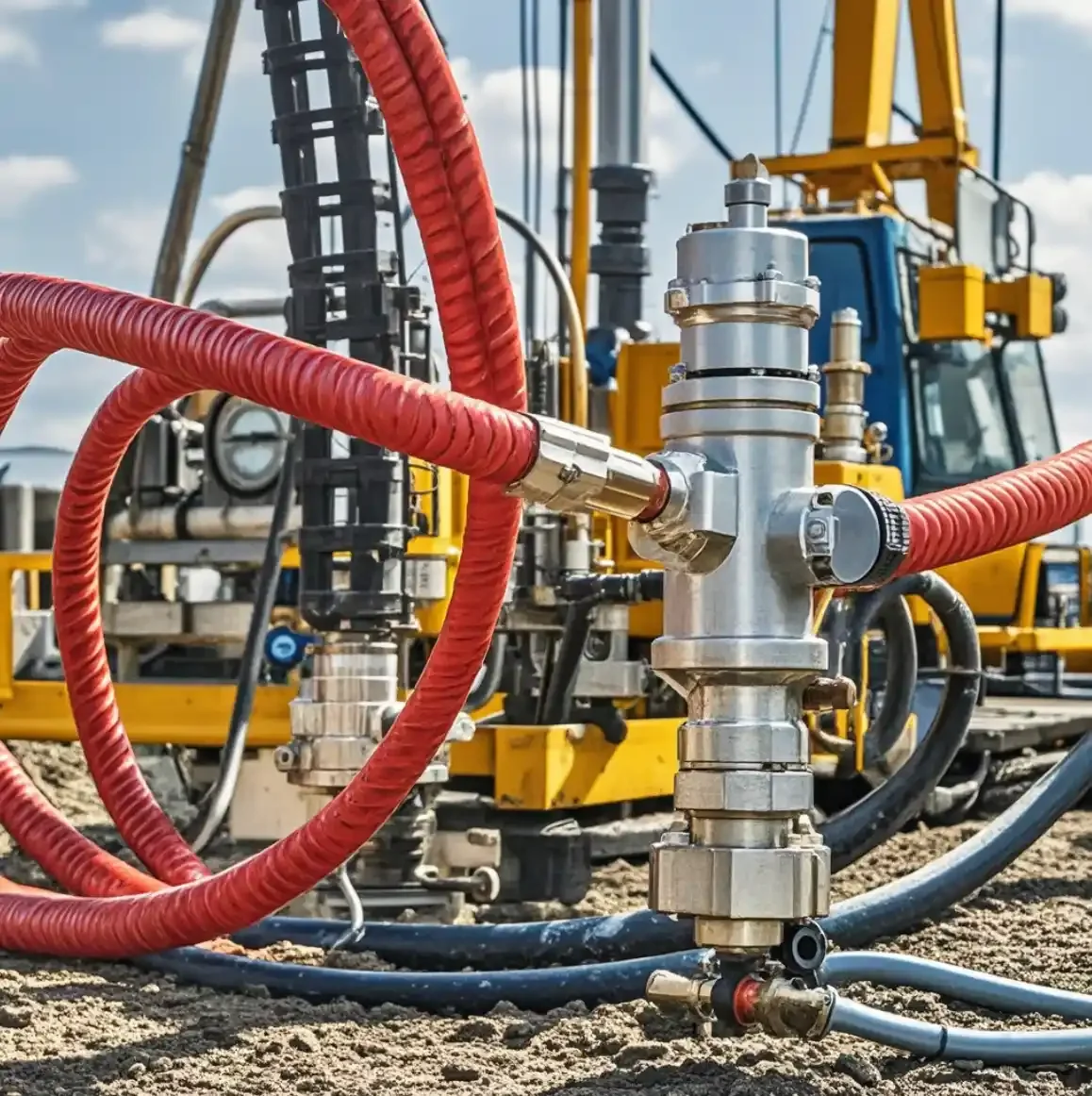
Correct selection: Select the appropriate hydraulic hose model and specification according to the working pressure, temperature, fluid medium and other factors of the hydraulic system. Ensure that the selected product meets the relevant standards and technical requirements.
Reasonable layout: When designing and installing hydraulic pipelines, try to avoid too many elbows and sharp turns to reduce the stress concentration points of the hydraulic hose. At the same time, ensure sufficient bending radius to avoid damage caused by excessive bending.
Strengthen protection: For hydraulic hoses exposed to the outside, a sheath or protective cover can be installed to prevent mechanical damage. Especially in harsh working environments, additional protective measures should be taken.
Regular inspection: Establish a complete maintenance system and regularly inspect hydraulic hoses, including appearance inspection, pressure testing, etc., to promptly discover and deal with potential safety hazards.
Control temperature: When working in high or low-temperature environments, appropriate insulation or cooling measures should be taken to ensure that the hydraulic hose is within a suitable working temperature range.
Select high-quality materials: Selecting high-quality raw materials and advanced production processes can improve the durability and reliability of hydraulic hoses. Especially for application scenarios under special working conditions, specially designed high-performance products should be selected.
Train operators: Strengthen the training of operators to improve their understanding and operating skills of hydraulic systems and reduce the occurrence of failures caused by misoperation.
Emergency plan: Develop a detailed emergency plan so that once a hydraulic hose is broken or other serious failures are found, measures can be taken quickly to reduce losses and impacts.
In summary, hydraulic hose rupture is a complex issue involving multiple factors. Through correct selection, reasonable installation, regular maintenance and scientific management, the risk of hydraulic hose breakage can be effectively reduced and the safe and stable operation of the hydraulic system can be guaranteed. I hope this article can provide some useful reference and help for everyone.
As a hydraulic hose company from China, we are well aware of the importance of hydraulic hoses in industrial systems. In order to ensure the quality and reliability of our products, we use advanced production processes and high-quality raw materials and strictly control every production link. At the same time, we also provide comprehensive technical support and services to help customers choose suitable products and provide installation and maintenance guidance. Through continuous technological innovation and optimized management, we are committed to providing customers with high-performance and long-life hydraulic hose solutions to meet the needs of different industries.


