

Views: 0 Author: Site Editor Publish Time: 2024-09-18 Origin: Site


In industry and everyday life, hoses are a common tool used to transport a variety of fluids and gases. However, not all hoses are the same, and specific applications require specific types of hoses. Although hydraulic hoses and ordinary hoses may be similar in appearance, there are significant differences between them. This article will explore the differences between hydraulic hoses and ordinary hoses in detail, and analyze them from multiple dimensions such as specific performance data, material science, and application scenarios to help readers better understand the differences between the two types of hoses.
From a material perspective, hydraulic hoses and ordinary hoses are fundamentally different. Hydraulic hoses are usually made of multiple layers of composite materials, including an inner rubber layer, a reinforcement layer (such as steel wire braiding or steel wire winding), and an outer rubber layer. This multi-layer structure gives hydraulic hoses a high degree of pressure resistance and abrasion resistance. For example, according to the ISO 18752 standard, hydraulic hoses must be able to withstand pressures of more than 400 bar without rupture. In contrast, ordinary hoses are usually made of a single material, such as polyvinyl chloride (PVC) or rubber, and are mainly used to transport low-pressure fluids, such as garden hoses, and the pressure capacity generally does not exceed 10 bar.
Hydraulic hoses are designed to safely and effectively transfer fluids under high pressure, so they must meet strict safety standards. According to the American Petroleum Institute (API), hydraulic hoses must pass a series of tests, including but not limited to pressure pulse tests, burst tests, and low-temperature bending tests. These tests ensure that the hoses perform reliably under extreme conditions. Ordinary hoses do not have such strict certification requirements because they are usually used in less harsh environments.
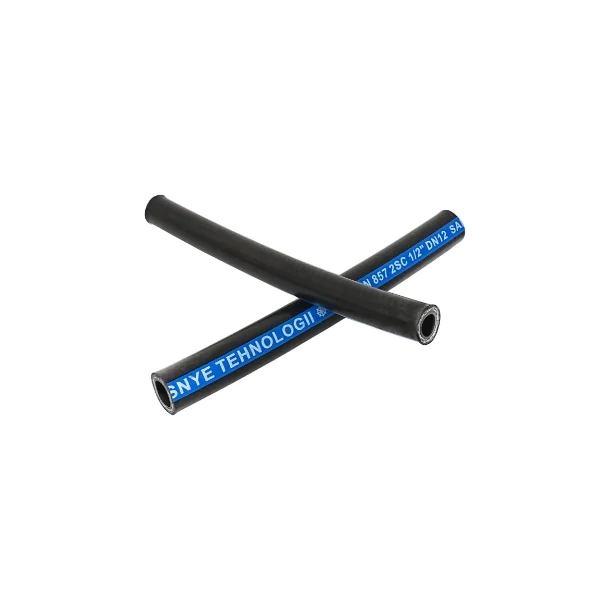
From the perspective of application areas, the use scenarios of hydraulic hoses and ordinary hoses are also very different. Hydraulic hoses are widely used in the industrial field, especially in construction equipment, agricultural machinery and mobile equipment. They transmit power in these applications to drive the operation of the machine. For example, in an excavator, the pressure of the hydraulic system can reach 400 bars, which requires high-strength hydraulic hoses to ensure the normal operation of the system. In contrast, ordinary hoses are more used in non-mechanical fields, such as home gardening, small cleaning equipment, etc., where the pressure requirements are lower.
Considering the cost factor, the production cost of hydraulic hoses is much higher than that of ordinary hoses. This is because hydraulic hoses require the use of more advanced raw materials, such as high-pressure resistant synthetic rubber and reinforcement materials, as well as complex manufacturing processes. In addition, hydraulic hoses have a long service life, which can reach several years or even more than ten years, which is one of the reasons for their high price. In contrast, ordinary hoses have a lower cost, but the corresponding service life is also shorter and may need to be replaced more frequently.
In summary, there are obvious differences between hydraulic hoses and ordinary hoses in terms of material composition, design requirements, application areas and cost. Hydraulic hoses are designed for high-pressure environments and can meet strict safety standards and long-term use needs, while ordinary hoses are suitable for low-pressure and non-critical application scenarios. Understanding these differences can help users make more informed decisions when choosing hoses to ensure safety and efficiency. Whether in industrial production or in daily home life, choosing the right hose is key to ensuring the normal operation of the system. Therefore, investing in the right hose can not only improve performance, but also reduce long-term maintenance costs.
As a hydraulic hose supplier, we are committed to providing customers with high-quality and reliable hydraulic hose products. We have advanced production equipment and a technical team that can customize various specifications and types of hydraulic hoses according to customer needs. Our products are strictly quality controlled to ensure compliance with international standards and customer requirements.


