

Views: 0 Author: Site Editor Publish Time: 2024-10-15 Origin: Site


In the hydraulic system, hydraulic hoses are an indispensable component. They are responsible for conveying high-pressure oil to ensure the normal operation of the system. However, due to long-term use, environmental factors, or improper installation, hydraulic hoses may leak. Leakage not only affects the working efficiency of the system but also may cause safety hazards. Therefore, it is crucial to regularly check and promptly deal with the leakage of hydraulic hoses. The following will introduce in detail how to check whether the hydraulic hose is leaking.
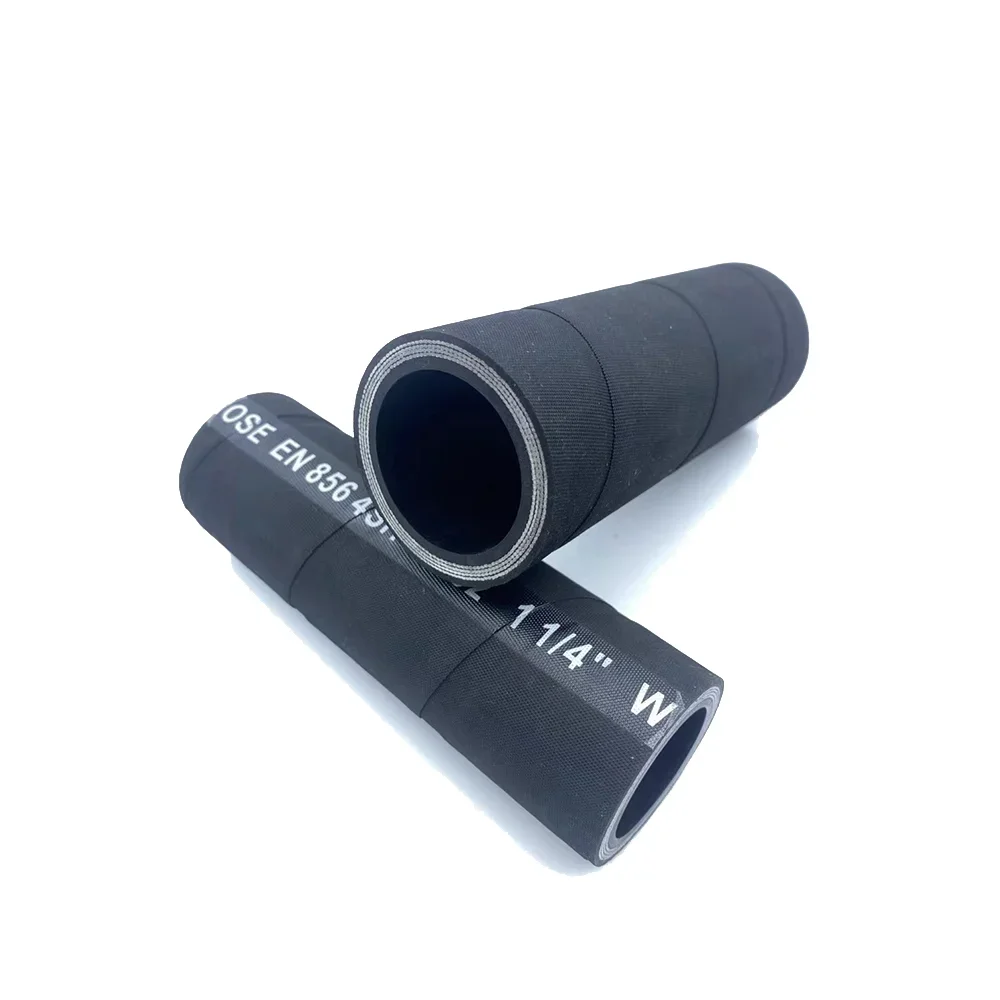
First, we need to understand the structure and working principle of hydraulic hoses. Hydraulic hoses are usually composed of an inner rubber layer, a reinforcement layer, and an outer rubber layer. The inner rubber layer is responsible for sealing and transmitting hydraulic fluids, the reinforcement layer provides the strength and pressure resistance of the hose, and the outer rubber layer plays a protective role. When a hydraulic hose leaks, it may be caused by damage to the inner rubber layer, fracture of the reinforcement layer, or aging of the outer rubber layer.
Next, we will introduce the specific steps on how to check whether the hydraulic hose is leaking.
Surface observation: First, make a comprehensive and detailed observation of the outer surface of the hydraulic hose with the naked eye. Look for obvious oil marks, oil stains, or oil droplets. These signs usually indicate that there is a leak inside the hose. Especially in the bending parts of the hose, the joint connection, and the transition area between the hose and the hard pipe, are high-incidence areas prone to leakage.
Joint inspection: Focus on the joints at both ends of the hose. Check whether the joints are loose, cracked, or deformed. If there are oil stains on the joints, it may be caused by the joints not being tightened in place or the aging of the sealing ring. At this time, you should use appropriate tools (such as wrenches) to re-tighten the joints and consider replacing new sealing rings.
Color change: Pay attention to the color change of the hose. Hoses that have been used for a long time may change color due to the penetration of oil, especially dark oils will cause uneven dark spots on the surface of the hose. Although this color change does not necessarily mean leakage, it often indicates that the hose has aged or is close to its service life, and special attention should be paid.
Preparation stage: Before conducting a pressure test, you need to prepare special pressure testing equipment, such as a manual pressure test pump or an electric pressure test pump. At the same time, ensure that the test environment is safe and free of hidden dangers to avoid accidents under high pressure.
Connect the pressure test pump: Connect the oil outlet of the pressure test pump to one end of the hose, close the other end, or connect it to a container that can withstand high pressure. Make sure the connection is firm and reliable to prevent it from falling off or leaking during the pressurization process.
Gradually increase the pressure: Start the pressure test pump and slowly increase the pressure in the hose. During the pressurization process, closely observe the appearance changes of the hose and whether there is oil leakage. Pay special attention to the weak parts of the hose, such as bends and near joints. Once a leak is found, stop the pressurization immediately and record the leak location and pressure value.
Maintain pressure: When the pressure reaches the maximum working pressure specified by the system, maintain the pressure for a period of time (usually a few minutes). During this period, continue to observe whether the hose leaks. If the hose can withstand the maximum working pressure without leaking, it means that its sealing performance is good; otherwise, further inspection and repair are required.
Record data: During the pressure test, the pressure value, leakage, and problems found at each stage should be recorded in detail. These data are of great significance for subsequent maintenance work and fault analysis.
Prepare soap water: Take an appropriate amount of soap powder or liquid soap add it to clean water and stir it evenly to make a soap water solution. Make sure that the solution concentration is moderate so that enough foam can be generated to detect the leak.
Apply soap water: Use a brush or sponge to evenly apply soap water on the surface of the hose, especially on the suspected leaking area. When applying, make sure that the coverage is comprehensive and that there are no dead corners so that all potential leaks can be accurately detected.
Observe bubbles: After applying soap water, carefully observe whether bubbles appear on the surface of the hose. If bubbles keep coming out, it means that there is a leak. The size and number of bubbles can preliminarily determine the severity of the leak.
Mark the leak point: Once a leak is found, it should be marked immediately with a marker or other marking tool for subsequent processing. At the same time, record the exact location and leakage of the leak point in order to formulate a maintenance plan.
Quiet environment: Before performing sound detection, it is necessary to ensure that the surrounding environment is quiet and free of noise interference so that the sound changes inside the hose can be clearly heard.
Listen to the sound: Put your ear close to the hose or use a tool such as a stethoscope close to the surface of the hose to listen carefully to the sound changes inside. Under normal circumstances, there should be only a faint sound of oil flowing inside the hose without other abnormal sounds.
Identify the sound of leakage: If you hear a sharp sound of airflow, it is likely that there is a gas leakage sound caused by a tiny leak point inside the hose. This sound is usually subtle and needs to be carefully identified to be heard.
Locate the source of the leak: The location of the leak point can be roughly determined based on the direction and intensity of the sound source. Then combine other detection methods to further confirm the exact location of the leak point for targeted treatment.
Prepare fluorescent agent: Select a suitable fluorescent agent and add it to the hydraulic system. The fluorescent agent will emit a special fluorescent signal in the oil for subsequent detection.
Run the system: Start the hydraulic system and let the oil circulate in the system for a period of time to ensure that the fluorescent agent can be fully mixed and cover the entire system including the hose.
Turn off the light source: Turn off all visible light sources in a dark environment to better observe the fluorescent signal. Tools such as blackout cloth or curtains can be used to block external light.
Observe fluorescence: Use ultraviolet light to illuminate the surface of the hose to observe whether there are fluorescent bright spots. These bright spots usually indicate the location where the oil penetrates from the inside of the hose to the outside, that is, the leak point. The leak point can be located more accurately by adjusting the angle and distance of the UV lamp.
The results obtained by the above-mentioned various detection methods are summarized and compared to determine the final leak point location and leak degree. Develop targeted maintenance plans according to the specific situation of the leak.
As a professional hydraulic hose manufacturer, we are well aware of the importance of product quality and customers' high requirements for safety performance. Therefore, during the production process, we strictly follow international standards and use advanced manufacturing technology and high-quality raw materials to ensure that each hose has excellent pressure resistance, temperature resistance, and corrosion resistance. At the same time, we provide comprehensive technical support and after-sales service, including detailed product manuals, regular maintenance guides, and professional troubleshooting guidance, to help customers promptly discover and solve potential leaks and ensure the safe and stable operation of the system.


