

Views: 0 Author: Site Editor Publish Time: 2024-10-22 Origin: Site


A hydraulic hose is a pipe used to transport liquids or gases and is widely used in various fields such as industry, agriculture, construction, etc. The inner layer material of the hydraulic hose has an important influence on its performance. This article will discuss the selection of materials, performance requirements, and influencing factors.
Nitrile rubber (NBR): Nitrile rubber is a common synthetic rubber with good oil resistance, wear resistance, and aging resistance. It is suitable for conveying petroleum-based hydraulic oil and other non-polar solvents. However, the temperature and cold resistance of nitrile rubber are poor, and it is not suitable for use in extreme temperature environments.
Chloroprene (Neoprene): Neoprene has excellent weather resistance, ozone resistance, and chemical resistance. It also has good wear resistance and elasticity and is suitable for hydraulic systems in outdoor or harsh environments. However, the oil resistance of chloroprene is not as good as that of nitrile rubber.
Polyethylene (PE): Polyethylene is a thermoplastic with good chemical stability and electrical insulation. It has good oil resistance and water resistance, but relatively low mechanical strength and wear resistance. Polyethylene hoses are usually used in low-pressure hydraulic systems.
Polyurethane (PU): Polyurethane is a high-performance synthetic material with extremely high wear resistance, oil resistance, and chemical resistance. It has good elasticity and strength and is suitable for high-pressure hydraulic systems. In addition, polyurethane also has good temperature resistance and cold resistance.
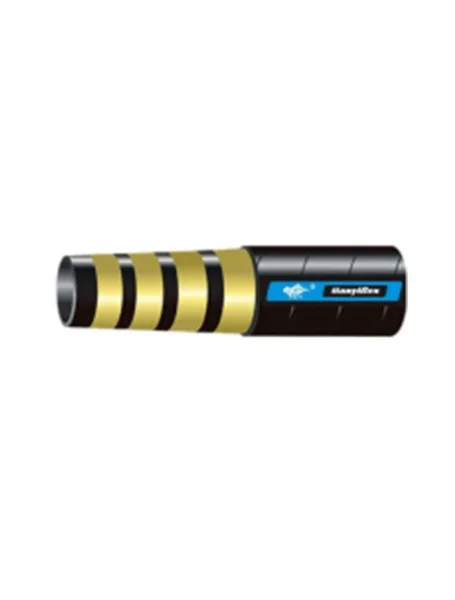
The inner layer material of the hydraulic hose has a direct impact on its performance. The first is the pressure resistance. The inner layer material needs to have sufficient strength and rigidity to withstand the pressure generated by the liquid or gas inside the pipeline. If the strength and rigidity of the inner layer material are insufficient, it will cause the hose to burst or leak during operation, thereby affecting the normal operation of the system.
The second is wear resistance. During the use of the hydraulic hose, it will be impacted and rubbed by the liquid or gas. If the wear resistance of the inner layer material is not good, it will cause wear or aggravation of the inner wall of the pipeline, thereby affecting the service life of the hose. Therefore, it is very important to choose an inner layer material with good wear resistance to improve the service life of the hydraulic hose.
In addition, the inner layer material also needs to have good corrosion resistance. The liquids or gases commonly used in hydraulic systems may contain corrosive substances. If the corrosion resistance of the inner layer material is not good, the inner wall of the pipe will be corroded, thus affecting the service life of the hose. Therefore, it is very important to select an inner layer material with good corrosion resistance to improve the service life of the hydraulic hose.
In addition, the friction coefficient of the inner layer material will also affect the performance of the hydraulic hose. The smaller the friction coefficient, the lower the energy consumption of the hydraulic hose when conveying liquid or gas, thereby improving the efficiency of the system. Therefore, it is very important to select an inner layer material with a lower friction coefficient to improve the performance of the hydraulic hose.
In addition to the above points, the selection of the inner layer material also needs to consider other factors, such as cost, machinability, etc. Different inner-layer materials have different costs and processing difficulties, so these factors need to be considered comprehensively when selecting the inner-layer material.
In short, the inner layer material of the hydraulic hose has an important influence on its performance. The selection of the inner layer material needs to consider factors such as corrosion resistance, wear resistance, and high-temperature resistance. At the same time, the performance of the inner layer material will also directly affect the pressure resistance, wear resistance, and corrosion resistance of the hose. Therefore, when designing and selecting hydraulic hoses, these factors need to be considered comprehensively to improve the performance and service life of the hose.
As a hydraulic hose manufacturer from China, we are committed to providing high-quality, reliable products and excellent services to meet the needs of global customers. We have advanced production equipment and a technical team that can customize hydraulic hose solutions according to customers' specific requirements.


